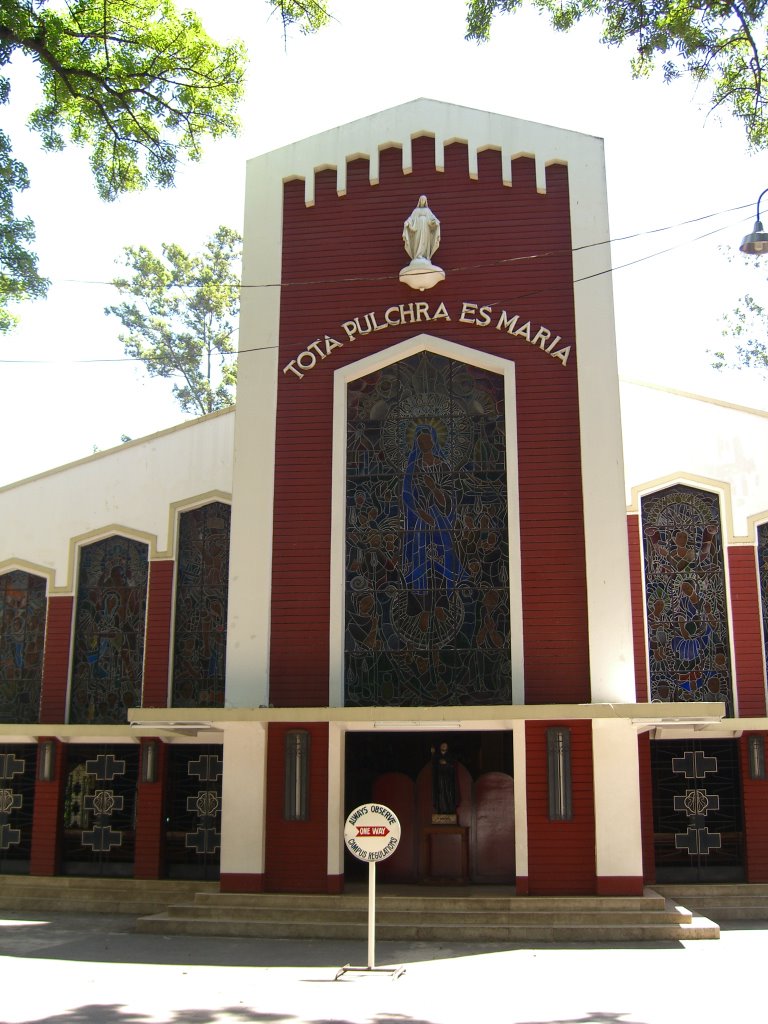
The San Agustin Cathedral is home to the Archdiocease of Cagayan de Oro. It stands beside the nice and wide Gaston Park. Too bad the fountain wasn't on when I visited it although they do put it on on weekends.
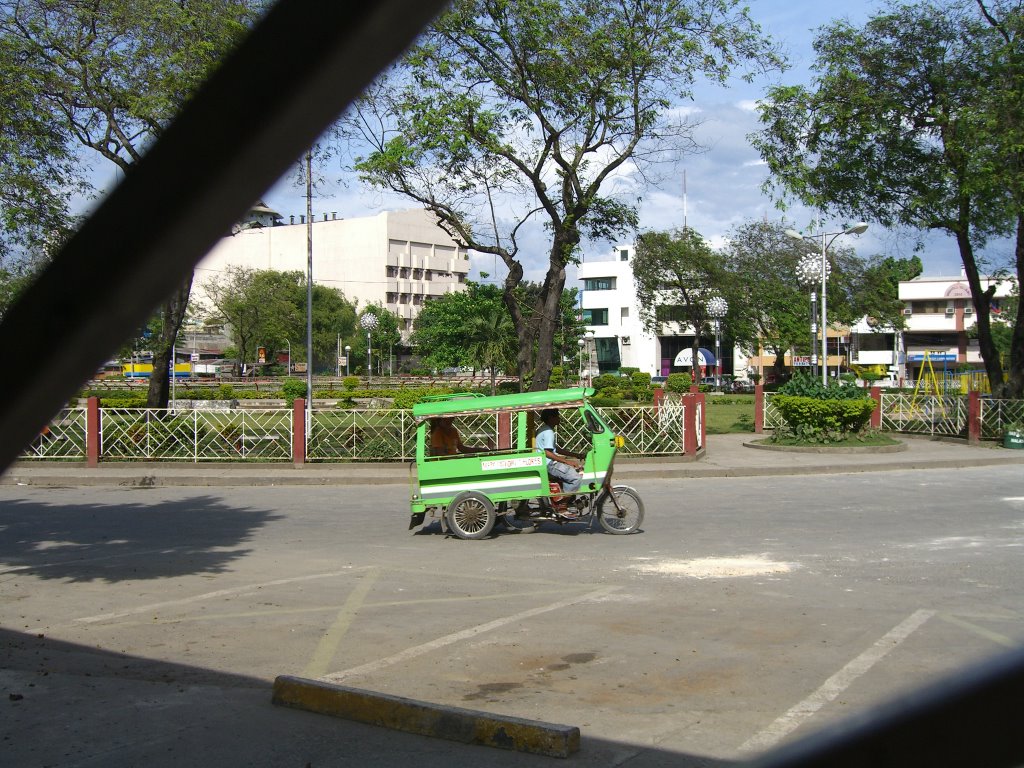
Gaston Park. That thing in the foreground, a Cagayan invention, is called "Motorela", or "rela" for short. It provides access to the city's many inner streets where jeepneys don't pass. Basic fare is Php 5!
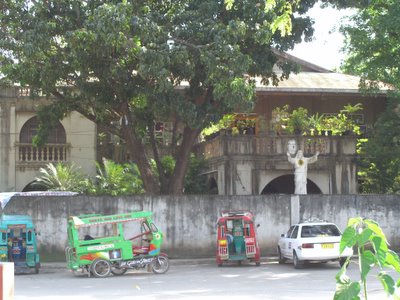
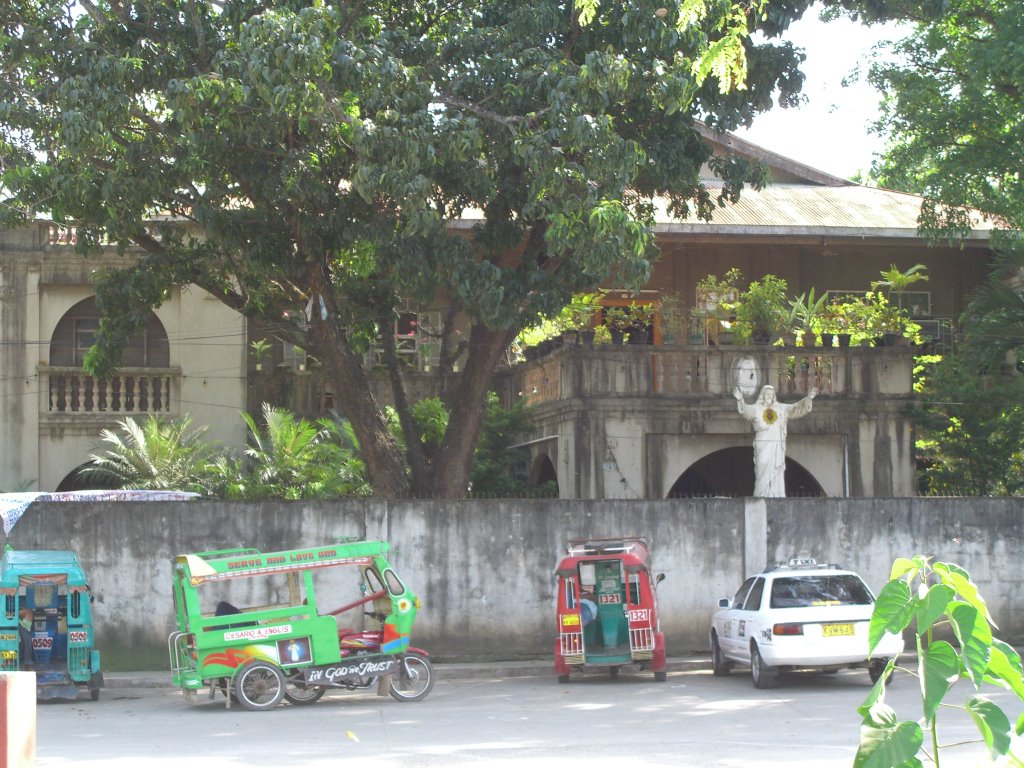
The Arzobispado's convento
Now for a quick look at history. In 1626, a 26-year old Augustinian Recollect friar arrived in Cagayan. His name was Fray Agustin de San Pedro, a Portuguese. Before his priesthood, he studied mathematics, architecture, gunnery, and military strategy at the University of Salamanca. Fray Agustin persuaded the leader of Himologan, Datu Salangsang, to transfer his settlement down river, to the area of today's Gaston Park and San Agustin Cathedral. Here, Fray Agustin built a church of native materials. Inside, he baptized Datu Salangsang and his wife, and later his people. Be informed that early settlers in Cagayan were not Muslims, but were polytheisitc animists although they paid tribute to Sultan Muhammad Dipatuan Kudarat, more known as Sultan Kudarat, who reigned from 1623 to 1671.
Now for a quick look at history. In 1626, a 26-year old Augustinian Recollect friar arrived in Cagayan. His name was Fray Agustin de San Pedro, a Portuguese. Before his priesthood, he studied mathematics, architecture, gunnery, and military strategy at the University of Salamanca. Fray Agustin persuaded the leader of Himologan, Datu Salangsang, to transfer his settlement down river, to the area of today's Gaston Park and San Agustin Cathedral. Here, Fray Agustin built a church of native materials. Inside, he baptized Datu Salangsang and his wife, and later his people. Be informed that early settlers in Cagayan were not Muslims, but were polytheisitc animists although they paid tribute to Sultan Muhammad Dipatuan Kudarat, more known as Sultan Kudarat, who reigned from 1623 to 1671.
Fortification of Cagayan
In response to the conversion, Sultan Kudarat sent a fleet of warriors to drive away the Spanish missionaries and to regain the lost tributes. Kudarat's attacks prompted Fray Agustin to build a wooden fortress and watchtower in Cagayan to protect Salangsang's people. He called the fortress Fuerza Real de San Jose, and it occupied an area now filled with Gaston Park and San Agustin Cathedral. Fray Agustin's defense of Cagayan earned him the title "El Padre Capitan".The fortress was rebuilt with stones in 1730. But Lt. Col. Jose Carvallo, the Spanish politico-military governor of Misamis, demolished it in 1875 and used the stones to pave the streets of the town.
Church Construction
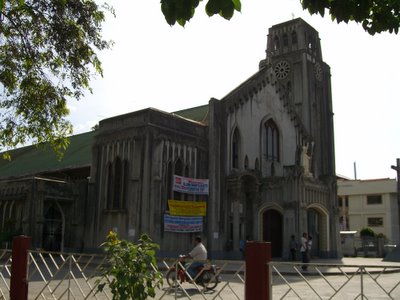
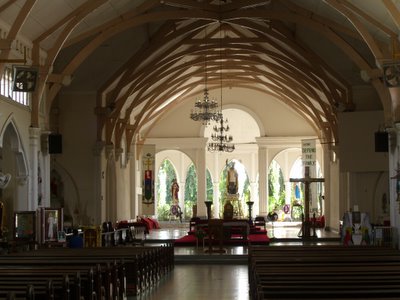
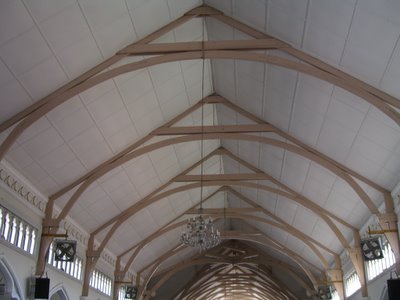
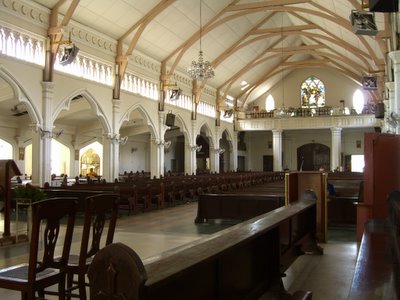
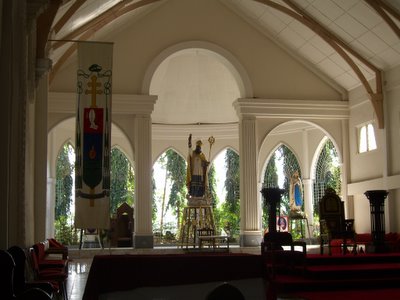
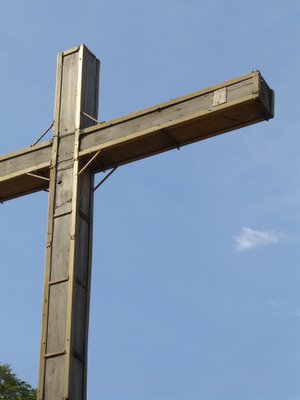
The Recoletos made Cagayan their mission center in 1674. But only on August 28, 1780 did they declare San Agustin the patron saint of Cagayan.In 1845, Fray Simon Loscos de Santa Catalina reconstructed the church, using marine stones from China. It had protruding buttresses and a single belfry. Inside were a magnificent altar and sanctuary with carved wooden niches and paintings. This church was destroyed during the Japanese bombing of Cagayan in 1945, exactly a hundred years later.In 1888, the Recoletos erected a wooden cross -- "Santa Cruz" -- outside the San Agustin Church. This, however, still stands today.
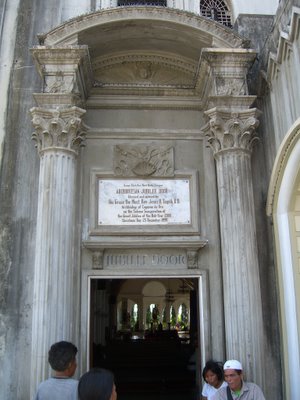
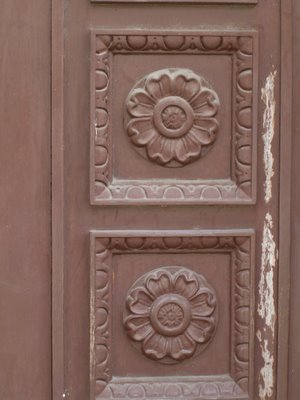
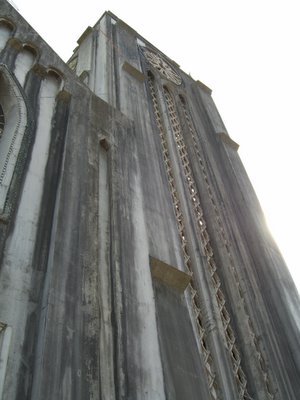
On June 29, 1951, Pope Pius XII created the first Catholic archbishopric in Mindanao, when he elevated the Diocese of Cagayan into an archdiocese.
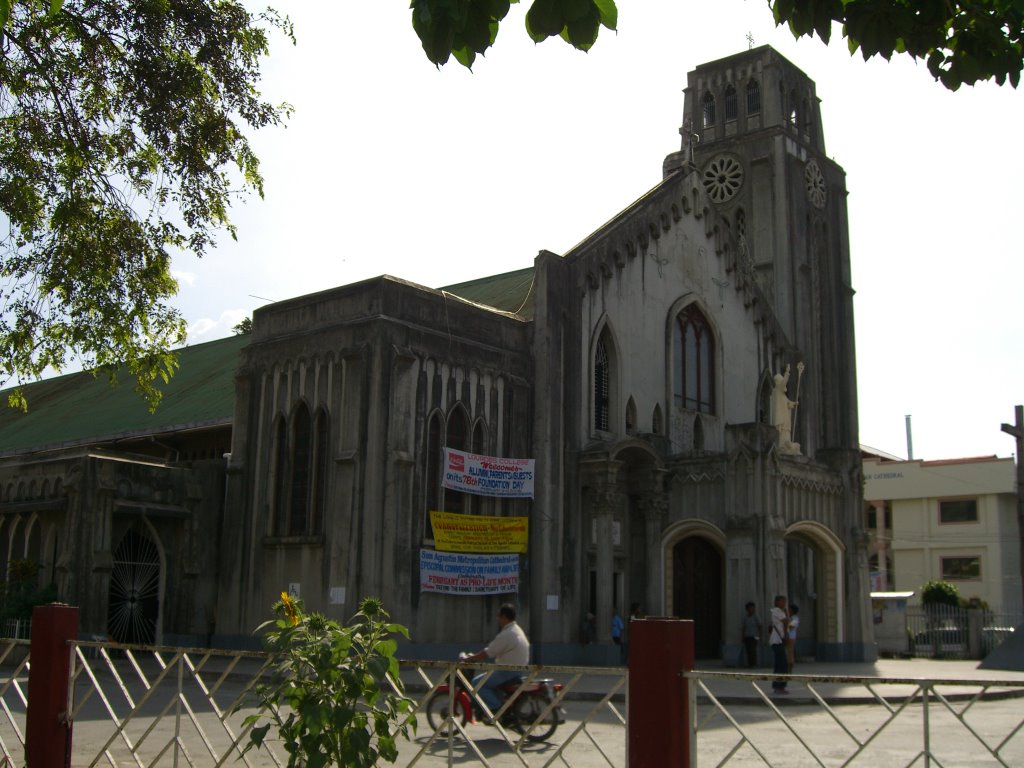

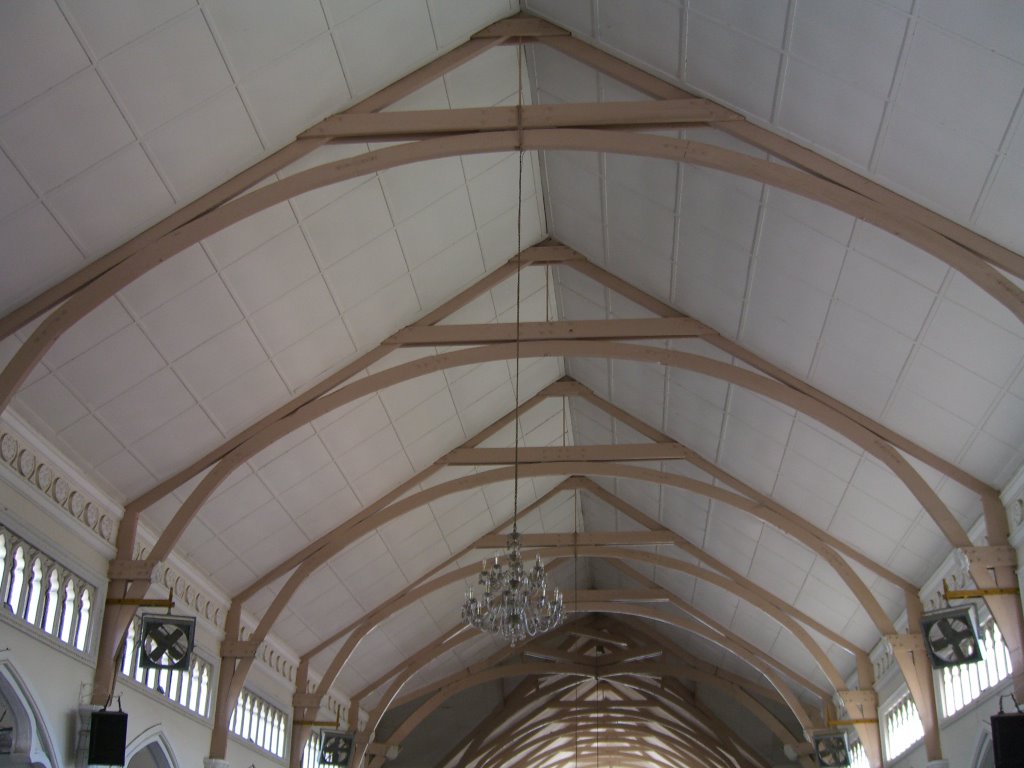


The Recoletos made Cagayan their mission center in 1674. But only on August 28, 1780 did they declare San Agustin the patron saint of Cagayan.In 1845, Fray Simon Loscos de Santa Catalina reconstructed the church, using marine stones from China. It had protruding buttresses and a single belfry. Inside were a magnificent altar and sanctuary with carved wooden niches and paintings. This church was destroyed during the Japanese bombing of Cagayan in 1945, exactly a hundred years later.In 1888, the Recoletos erected a wooden cross -- "Santa Cruz" -- outside the San Agustin Church. This, however, still stands today.


On June 29, 1951, Pope Pius XII created the first Catholic archbishopric in Mindanao, when he elevated the Diocese of Cagayan into an archdiocese.
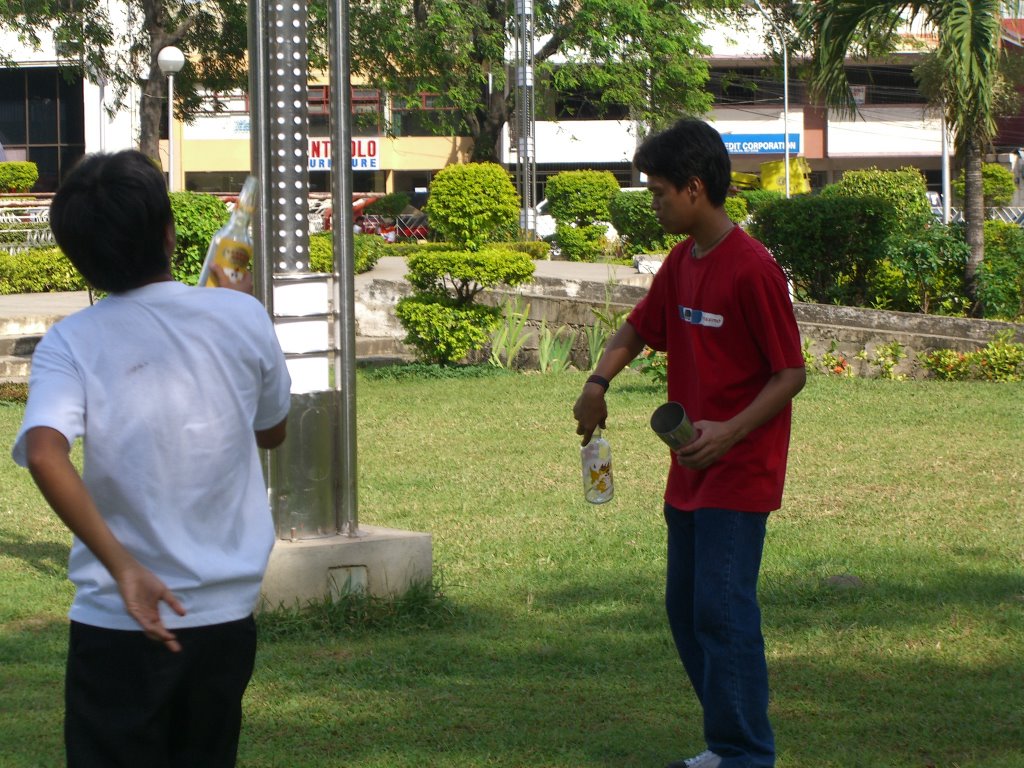

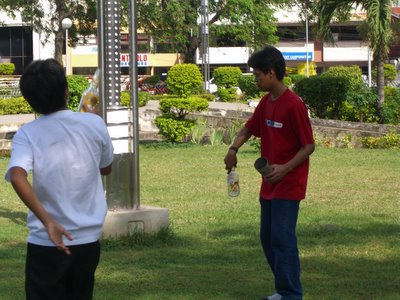
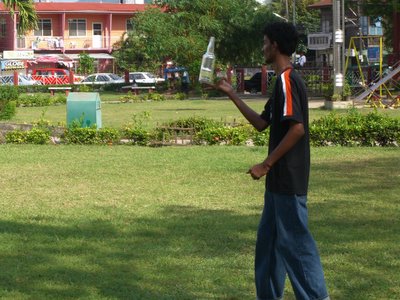
Students of HRM try out their bartending skills at the Gaston Park

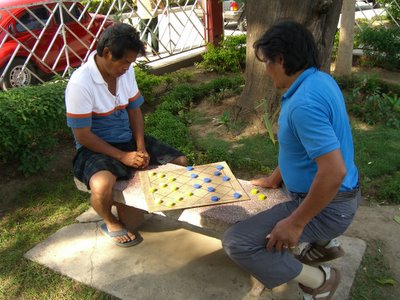
Chess is a well-loved game in this city. Whenever you see a group of men huddled together in any alley or open space like this one at Gaston Park, the activity would most likely be a game of chess or, as the case in the 2nd photo, dama.
Source: Antonio J. Montalvan II. Mr Montalvan is a Mindanao anthropologist, ethnohistorian and a Ford Foundation scholar for the doctorate in anthropology on Mindanao Studies with the Mindanao Anthropology Consortium. He has written articles about Mindanao history and culture in academic journals, and contributes a monthly column to the Philippine Daily Inquirer. He is the author of "A Cagayan de Oro Ethnohistory Reader", which was launched on March 8, 2004. Montalvan is also the vice-president of the Heritage Conservation Advocates.
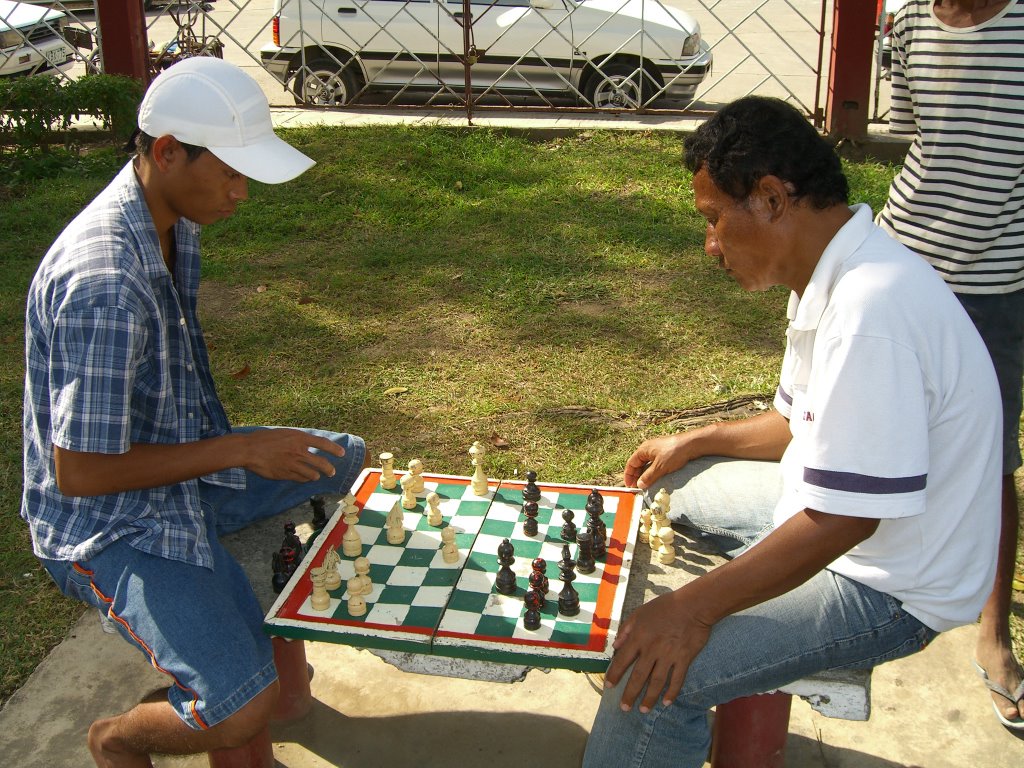
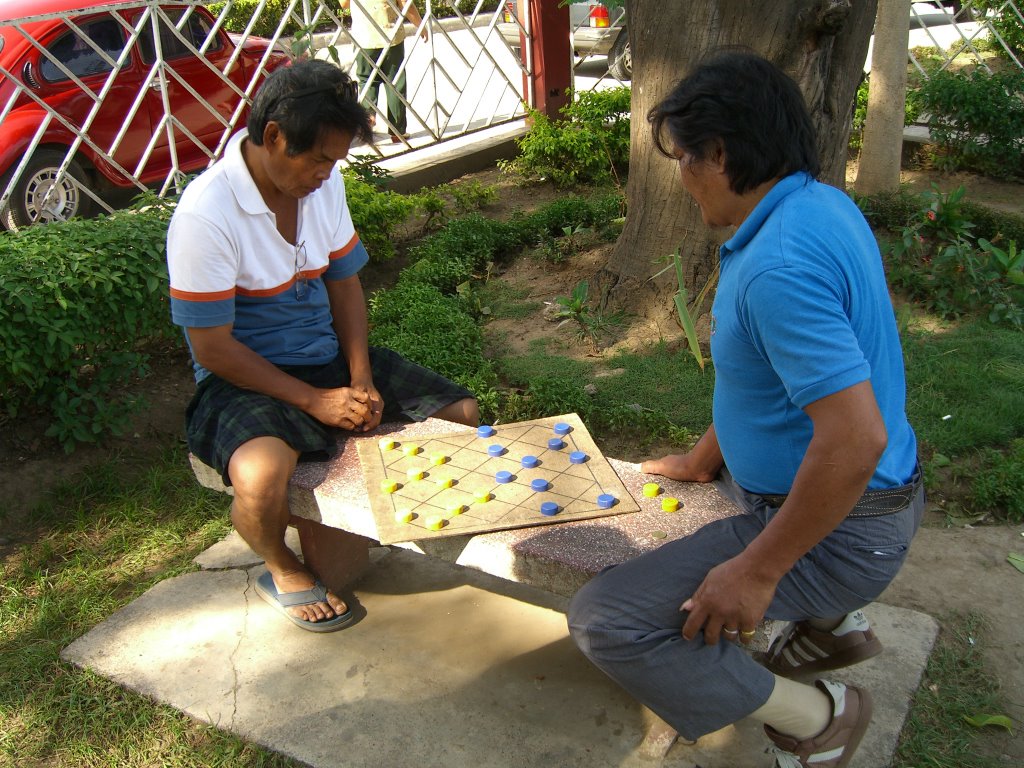
Chess is a well-loved game in this city. Whenever you see a group of men huddled together in any alley or open space like this one at Gaston Park, the activity would most likely be a game of chess or, as the case in the 2nd photo, dama.
Source: Antonio J. Montalvan II. Mr Montalvan is a Mindanao anthropologist, ethnohistorian and a Ford Foundation scholar for the doctorate in anthropology on Mindanao Studies with the Mindanao Anthropology Consortium. He has written articles about Mindanao history and culture in academic journals, and contributes a monthly column to the Philippine Daily Inquirer. He is the author of "A Cagayan de Oro Ethnohistory Reader", which was launched on March 8, 2004. Montalvan is also the vice-president of the Heritage Conservation Advocates.
As of March 4, 2006, my former Arts & Sciences Dean, Fr. Antonio Ledesma SJ, is the newly-appointed Archbishop of Cagayan de Oro. We offer our warmest congratulations and prayers for his success and continued health.











.jpg)
.jpg)
.jpg)
.jpg)
.jpg)
.0.jpg)
.jpg)
.jpg)
.jpg)
.jpg)
.jpg)
.jpg)
.jpg)
.jpg)
.jpg)
.jpg)